20items
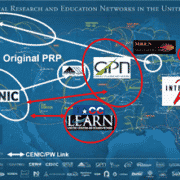
Toward the National Research Platform
Academic researchers need a simple data sharing architecture with end-to-end 10-to-100Gbps performance to enable virtual co-location of large amounts of data with computing.
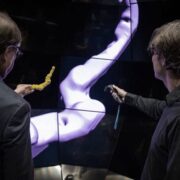
3D Medical Imaging Pilot to Improve Surgical Outcomes for Patients with Crohn’s Disease
Pilot study to create a 3D Medical Imaging tool to personalize clinical decisions and improve surgical outcomes for patients with Crohn’s disease.
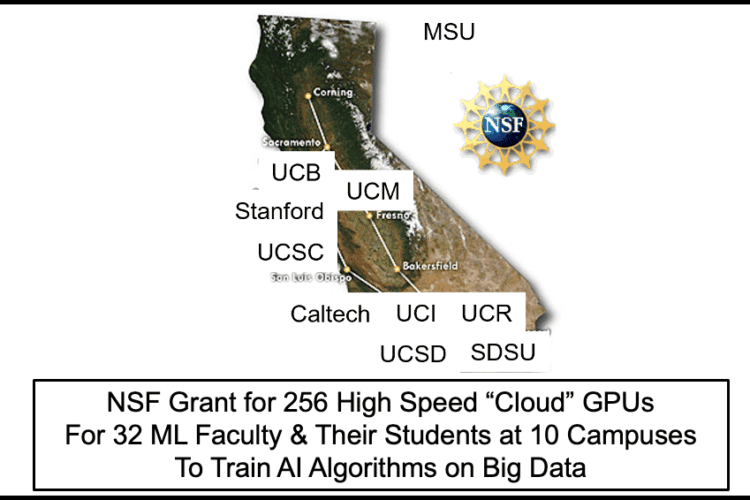
Cognitive Hardware and Software Ecosystem Community Infrastructure (CHASE-CI)
CHASE-CI, will build a cloud of hundreds of affordable GPUs, networked together with a variety of neural network machines to facilitate development of next generation cognitive computing.
Pacific Research Platform
The PRP builds on the optical backbone of Pacific Wave, a joint project of CENIC and the Pacific Northwest GigaPOP to create a seamless research platform.
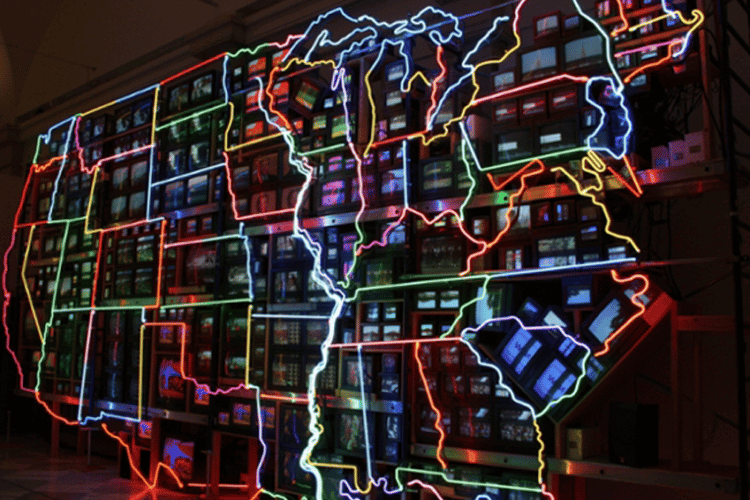
Towards Deploying a Science-Driven Regional Interoperable Science DMZ
High-performance networking is a key enabler of data-intensive science, as researcher collaborations and the sharing/accessibility of data require large, fast transfers of data on a national and international scale.

WIFIRE: A Scalable Data-Driven Monitoring, Dynamic Prediction and Resilience Cyberinfrastructure for Wildfires
The University of California at San Diego is awarded a grant to build an end-to-end cyberinfrastructure, called WIFIRE, for real-time and data-driven simulation, prediction and visualization of wildfire behavior.
PRISM@UCSD: A Researcher Defined 10 and 40Gbit/s Campus Scale Data Carrier
This researcher-defined network unites users of in-lab scientific instruments such as genome sequencers and microscopes with remote compute, visualization, data storage, and analysis systems.
Broken link
EAGER: Wildfire Modeling and Prevention Initiative: Developing a Technical Framework for Integrating Research with Public Policy Decision Support
The need for descriptive and predictive simulation tools to support wildfire prevention, or suppression during future wildfire events, is becoming critical.
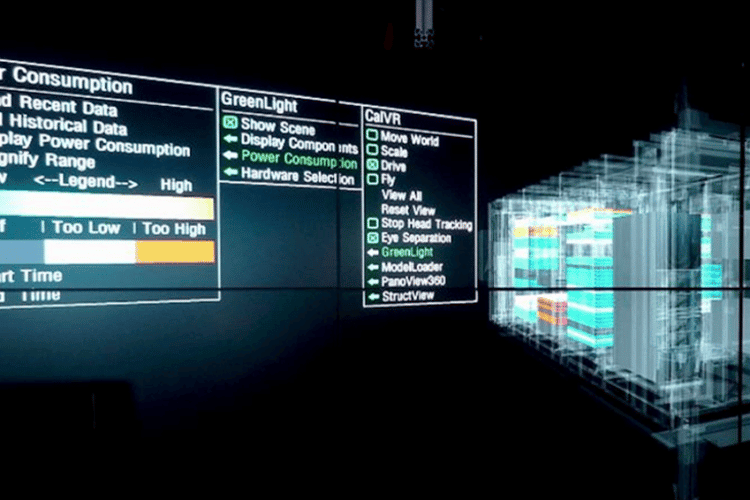
Project GreenLight
This project, developing an instrument called GreenLight, measures, monitors, and optimizes the energy consumption of large-scale scientific applications from many different areas.

Community Cyberinfrastructure for Advanced Microbial Ecology Research and Analysis
The CAMERA (Cyberinfrastructure for Advanced Marine Microbial Ecology Research and Analysis) community database for metagenomic data deposition is an important first step in developing methods for monitoring microbial communities.
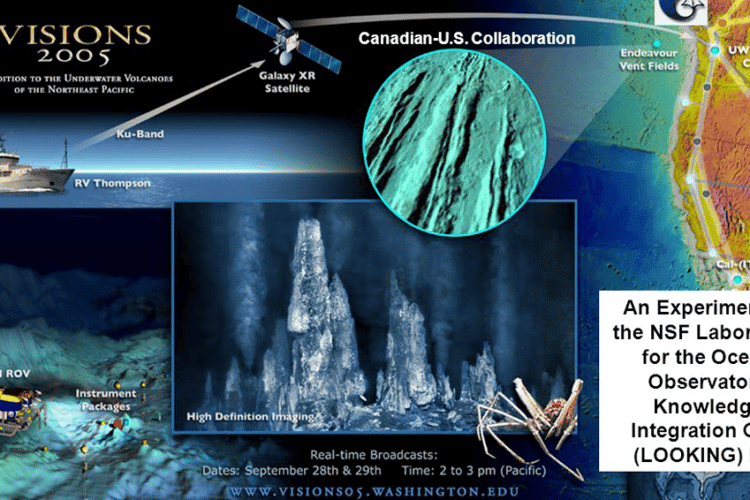
Designing the Next Generation Cyber-infrastructure to Operate Interactive Ocean Observatories
This project involves research and experimentation with cyberinfrastructure components in order to develop and prototype new approaches to information technology for ocean observing systems.
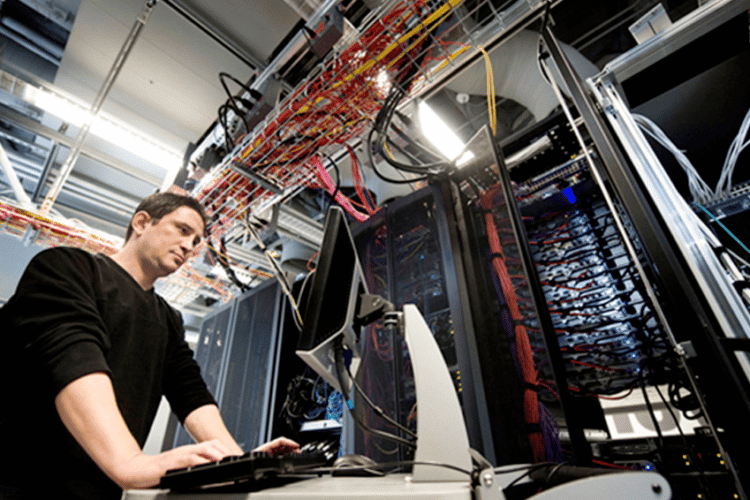
Quartzite
Quartzite is a Campus-wide, Terabit-Class, Field-Programmable, Hybrid Switching Instrument for Comparative Studies.

The New Role of Science and Engineering in Risk Reduction
This grant funded the development of a computer/information science cyberinfrastructure research agenda within the context of homeland security.

OptIPuter
Visualization technologies, is an envisioned infrastructure that will tightly couple computational resources over parallel optical networks using the IP communication mechanism.
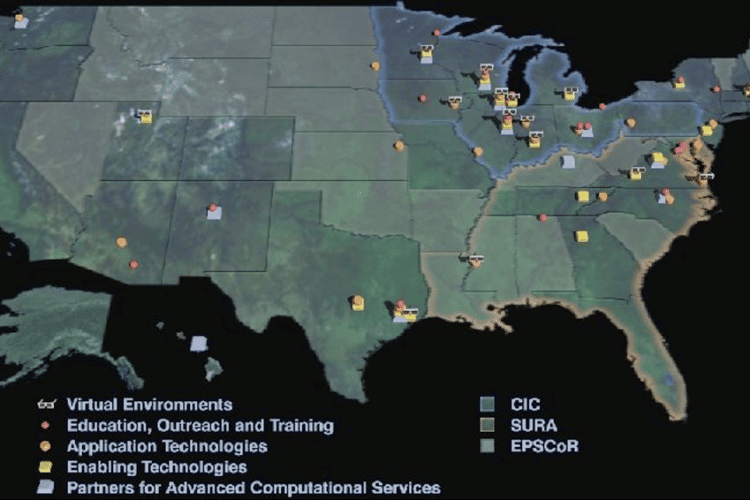
National Computational Science Alliance
The program focuses on newly emerging opportunities in HPC and communications, providing flexibility, both to adapt to rapidly evolving circumstances and to meet the need for high-end computation.
The National Center for Supercomputing Applications
NCSA is one of the national supercomputer centers funded by the Division of Advanced Scientific Computing and provides supercomputer access to scientific researchers as well as training/educational and other related scientific services.
Massively Parallel Computing at the National Center for Supercomputing Applications (NCSA)
This award will provide hardware to increase the communication bandwith, and also allow a greater number of users to access the machine.
Exploratory Research and Initial Development of Software for the Analysis of Multiple Hybridization Images
This collaboration will work toward developing a software package for analyzing clone fingerprint data used for constructing physical maps of genomes.
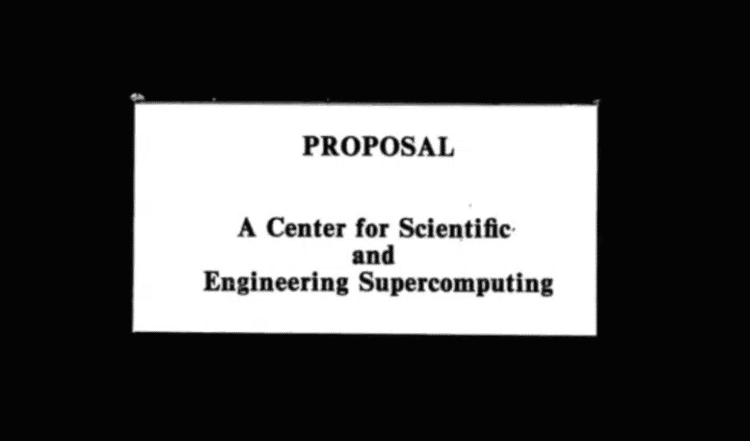
Phase II: Supercomputer Center
NSF Award to support the creation of a supercomputer center.

Numerical, Theoretical, and Astrophysical Relativity (Physics)
This project, under the direction Astronomy of Larry L. Smarr, Department of and physics, is entitled: “Numerical. Theoretical, and Astrophysical Relativity (Physics).”